
Last updated: 26 October 2026. We have not run our own speed or uptime tests for this guide, so we do not rank hosts by speed. Use it to understand what to compare, then check live plans and prices.
Introduction
In today’s digital world, having a fast and reliable website is extremely important for every business, blogger, freelancer, and online store owner. No matter how beautiful your website design is or how valuable your content may be, your website cannot perform well if your hosting service is slow or unreliable. That is why choosing the right web hosting provider is one of the most important decisions for website success in 2026.
Web hosting is the foundation of your website. It stores your website files and makes them available to visitors on the internet. A good hosting provider helps your website load faster, stay online without downtime, and remain secure from cyber threats. On the other hand, poor hosting can make your website slow, unstable, and difficult to manage.
In India, the demand for web hosting is growing rapidly because more people are starting blogs, YouTube channels, online businesses, and eCommerce stores. Many hosting companies compete by offering different features, pricing plans, and performance levels, and not every provider gives the same quality of service. Some focus on affordability, while others focus on premium speed and advanced security.
In this guide, we will explain:
- What web hosting is
- Why hosting performance matters
- Different types of hosting
- Popular hosting providers used by Indian websites in 2026
- A feature comparison
- Tips to choose the right hosting plan
- Common mistakes beginners should avoid
What Is Web Hosting?
Web hosting is a service that allows individuals and businesses to publish their websites on the internet. Every website contains files such as images, videos, code, databases, and content. These files need to be stored on a powerful computer called a server.
A hosting company provides server space and technologies that keep your website online 24/7. When someone types your domain name into a browser, the hosting server delivers your website content to the visitor. Without web hosting, your website cannot be accessed online.
Why Hosting Performance Matters in 2026
Website performance matters because users expect pages to load quickly. Even a delay of a few seconds can hurt user experience and search engine rankings.
Faster Website Speed
A fast-loading website improves user experience, conversion rates and customer satisfaction. Google considers page experience as one of many signals, and slow websites tend to have higher bounce rates because visitors leave quickly.
Better SEO Rankings
Search engines prioritize websites that give a smooth and fast browsing experience. Good hosting supports better Core Web Vitals, page speed, uptime and mobile performance. Hosting alone will not rank a site, but it creates the technical foundation.
Higher Uptime Reliability
Uptime is the percentage of time your website stays online. Many providers advertise 99.9% uptime. Frequent downtime can reduce traffic, damage your brand reputation and affect online sales, so uptime is especially important for businesses and eCommerce websites.
Improved Website Security
Secure hosting providers offer protection features such as SSL certificates, daily backups, malware scanning, firewall protection and DDoS protection. These features help keep your website and customer data safe.
Types of Web Hosting
Different websites require different types of hosting. Understanding the types helps you select the best plan for your needs.
Shared Hosting
Shared hosting is the most affordable type. Multiple websites share the same server resources such as CPU, RAM and storage. It is best for beginners, small blogs, portfolios and low-traffic websites. Advantages are low cost and ease of use. Disadvantages are limited resources, slower performance during high traffic and less server control.
VPS Hosting
VPS stands for Virtual Private Server. A physical server is divided into virtual servers and each user gets dedicated resources. It suits growing websites, medium businesses and developers. It offers better performance and more control, but costs more than shared hosting and needs some technical knowledge.
Cloud Hosting
Cloud hosting uses multiple interconnected servers instead of one physical server, which improves reliability and scalability. It suits high-traffic websites, eCommerce stores and business websites. It is more expensive and pricing can be more complex.
Dedicated Hosting
Dedicated hosting gives one website an entire physical server. It suits large businesses and high-traffic applications. It offers maximum control but is very expensive and needs server management skills.
Popular Hosting Providers Used by Indian Websites in 2026
These are well-known providers that serve customers in India. Most of them are international companies, and some have data centres in or near India. We describe what each is known for, not test results.
Hostinger India
Hostinger is one of the most affordable and beginner-friendly hosting companies available today. Its plans list LiteSpeed servers, free SSL, NVMe storage, an AI website builder and a free domain on eligible plans. Pros: very low entry pricing and an easy dashboard. Cons: renewal prices are much higher than the introductory rate, and basic plans have fewer advanced features. Best for beginners, bloggers and small businesses.
Bluehost India
Bluehost is a popular choice for WordPress websites and is widely used by bloggers. It offers one-click WordPress installation, free SSL, a free domain on some plans and support. Pros: beginner-friendly interface and easy WordPress management. Cons: it can cost more than budget hosts, and there is upselling during checkout. Best for WordPress users and beginners.
SiteGround
SiteGround is a premium hosting provider known for customer support and performance tools such as advanced caching, daily backups and a free CDN. Pros: strong support and security tools. Cons: higher pricing and limited storage on lower plans. Best for professional websites and businesses.
Cloudways
Cloudways is a managed cloud hosting platform that offers flexibility and room to scale. Pros: scalable cloud infrastructure and managed servers. Cons: it costs more and is slightly advanced for beginners. Best for eCommerce websites and growing businesses.
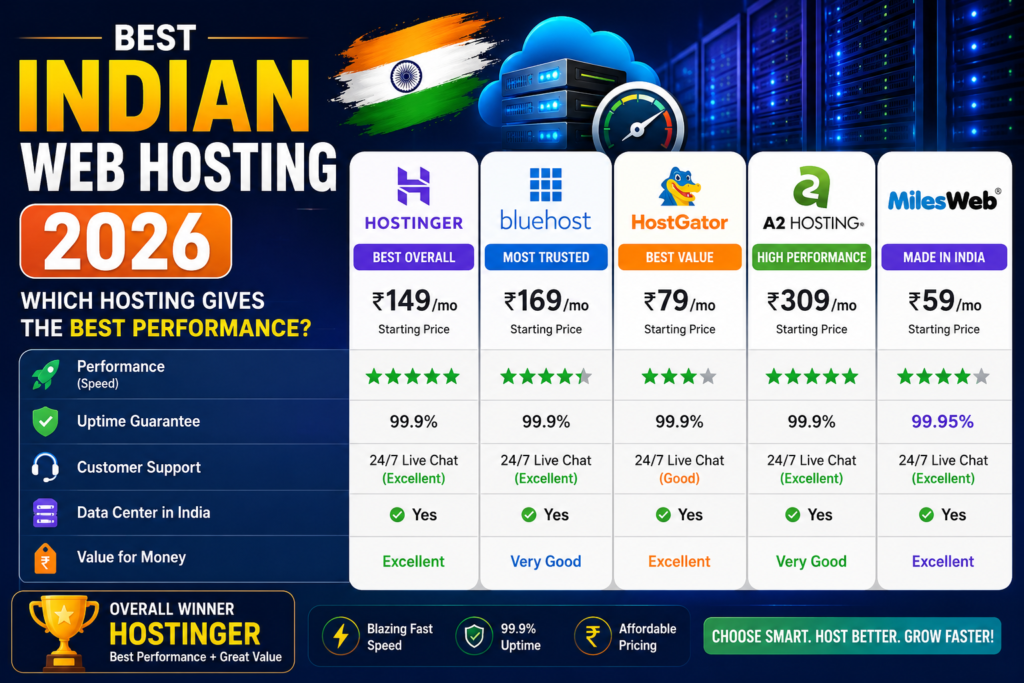
Feature Comparison
| Hosting provider | Type of hosting | Best for | What to check before buying |
|---|---|---|---|
| Hostinger | Shared, cloud | Beginners and budget blogs | Renewal price and billing term |
| Bluehost | Shared, WordPress, VPS | WordPress beginners | Price after the first term |
| SiteGround | Shared, cloud | Businesses and professional sites | Whether the cost fits your budget |
| Cloudways | Managed cloud | Growing and high-traffic sites | Usage-based pricing and the learning curve |
This table does not rate speed or uptime because we have not tested them. For rupee prices and renewal rates, see our hosting plan comparison for a small blog in India.
How to Choose the Best Hosting Provider
Choosing the right hosting depends on your website goals and budget.
Check Website Speed Features
Look for SSD or NVMe storage, LiteSpeed or similar fast servers, CDN integration and advanced caching. These technologies help improve loading speed. After launch, test your own site on Google PageSpeed Insights.
Compare Uptime Guarantees
A reliable hosting company should advertise at least 99.9% uptime.
Analyze Customer Support
Good customer support is extremely important, especially for beginners. Look for live chat support, fast response time and helpful tutorials.
Check Security Features
Your hosting provider should include free SSL, backups, malware protection and firewall security.
Compare Pricing Carefully
Many companies offer low introductory prices but high renewal fees. Always compare long-term pricing before purchasing.
Common Mistakes Beginners Make
- Choosing the cheapest hosting: cheap hosting often sacrifices performance and support quality.
- Ignoring renewal prices: many users forget to check renewal costs after the first term.
- Not checking server location: servers in or near India usually give better loading speed for Indian visitors.
- Buying unnecessary features: choose only the features you actually need.
Final Verdict
The best hosting for your website in 2026 depends on your specific needs and budget. If you use WordPress, also read our guide to choosing the best WordPress hosting.
- If you are a beginner on a budget, Hostinger is a common starting point.
- If you use WordPress, Bluehost is a familiar choice.
- If you want a premium or scalable setup, look at SiteGround and Cloudways.
Before purchasing hosting, always compare speed features, uptime guarantees, security, customer support, pricing and renewal cost, and room to scale.
FAQs
Which hosting is best in India for beginners?
Hostinger and Bluehost are popular beginner-friendly choices. Compare their renewal prices before you buy.
Which hosting provides the fastest performance?
We have not tested speed ourselves. Managed cloud and premium hosts such as Cloudways and SiteGround are often chosen for performance, but your results depend on your site, plan and server location. Test your own site after launch.
Is cloud hosting worth it in 2026?
Cloud hosting offers better scalability and reliability for growing or high-traffic sites, but a new small blog usually does not need it yet.
How much does web hosting cost in India?
Basic shared hosting plans in India are listed from around ₹69 to ₹300 per month on long prepaid terms, depending on the provider and features. Renewal prices are usually much higher, so check them before buying.